
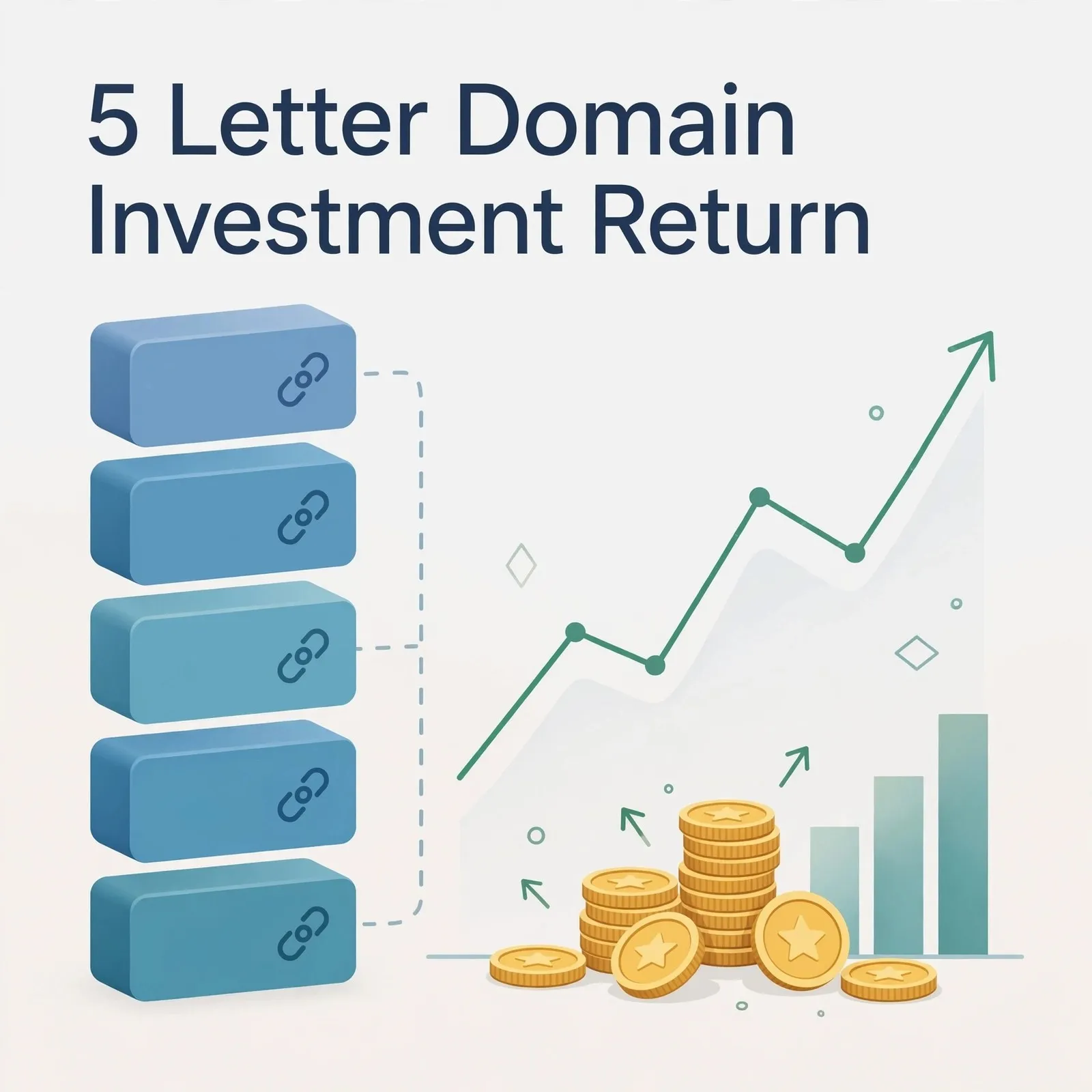
A realistic 5 letter domain investment return typically falls between 15% and 40% annualized for well-selected, pronounceable assets, not the 10x flips that dominate forum headlines. Sales data compiled from aftermarket transactions shows that holding periods of 2-5 years, paired with disciplined acquisition pricing, produce the most consistent outcomes. Investors who buy generic, brandable five-character names at fair market entry points – rather than chasing speculative premiums – are the ones who see repeatable, defensible gains.
Domain investing has a marketing problem. Every forum thread seems to feature someone who bought a five-letter string for $200 and sold it eighteen months later for $18,000. Those stories exist, and they are true – but they are also outliers, not the baseline. If you’re evaluating 5 letter domains as a genuine portfolio asset rather than a lottery ticket, you need numbers that reflect the median outcome, not the best one someone posted on Twitter.
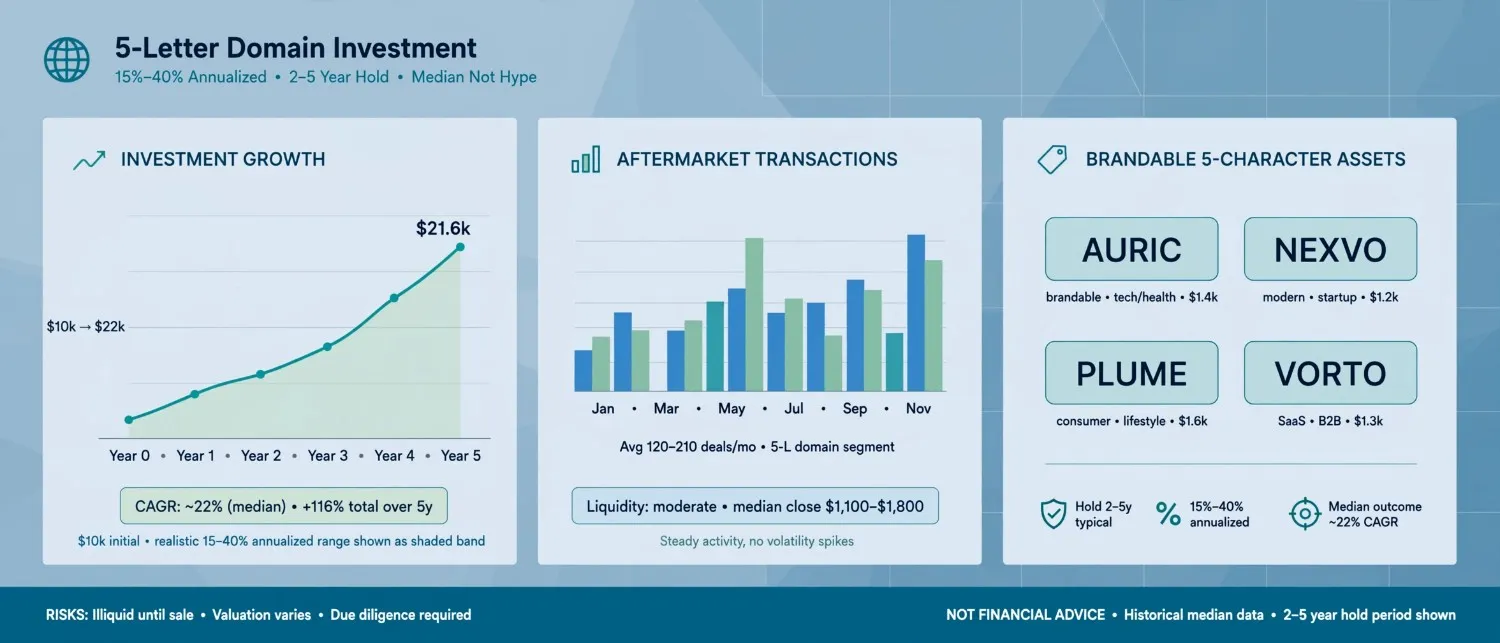
This article walks through what actual aftermarket sales data indicates about return expectations, the variables that separate a domain that appreciates from one that sits stagnant, and the mistakes that quietly erode returns even on names that “should” have worked.
What “ROI” Actually Means for a 5-Letter Domain
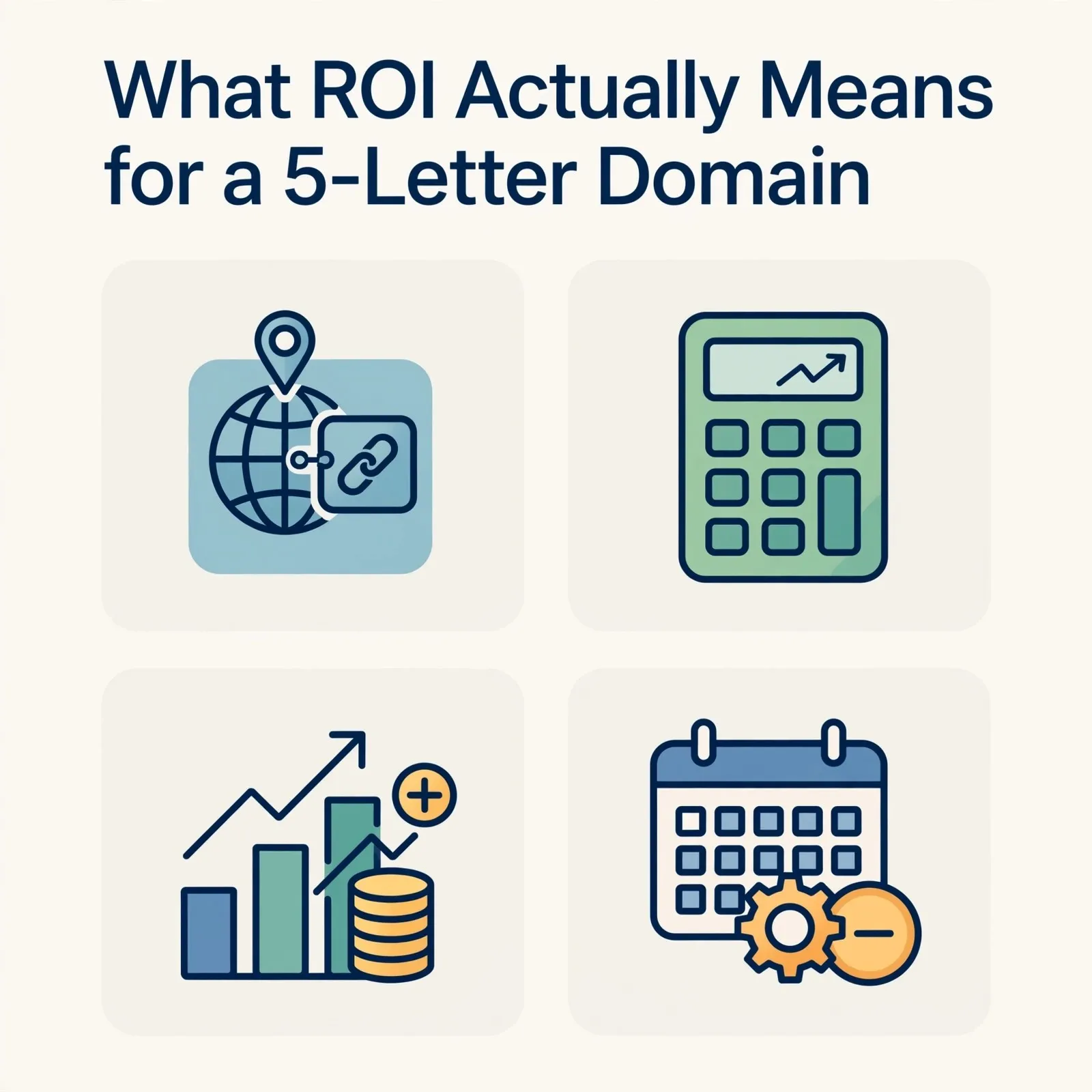
Before comparing numbers, it helps to define the term precisely, because domain ROI is calculated differently than most digital assets.
Unlike stocks or real estate, a domain generates no passive yield while you hold it.
Consequently, your return is almost entirely a function of two things:
Acquisition discipline
what you paid relative to the name’s structural quality (length, pronounceability, letter pattern, extension)
Exit timing and buyer pool
Whether a genuine end-user, startup, or brand exists that needs that exact string when you decide to sell
There’s no dividend, no rental income, and no guaranteed liquidity event. That single fact explains why return expectations for domain investing should be modeled more like early-stage collectibles than like index funds.
Consequently, three separate metrics matter more than a single headline ROI number:
Gross ROI
Sale price divided by purchase price, before any deductions. This is the number most forum posts quote, and it’s the least useful for planning purposes.
Net ROI
Gross return minus renewal fees accumulated over the holding period, marketplace commission, and any escrow or transfer costs.
This is the number that actually reflects cash in your pocket.
Annualized ROI
Net return expressed as a yearly rate, which allows fair comparison between a name that sold in eight months and one that took six years. Without annualizing, a 200% return sounds identical whether it took one year or ten – and the difference matters enormously for capital efficiency.
Investors who only track gross ROI tend to overestimate their actual performance, sometimes significantly, because renewal costs and commissions compound quietly in the background across every year a name sits unsold.
Quick Definition: 5-Letter Domain Investment Return
The 5 letter domain investment return is the percentage gain (or loss) realized between a domain’s purchase price and its eventual resale price, adjusted for renewal fees, marketplace commissions, and holding-period opportunity cost.
What the Sales Data Actually Shows
Aftermarket sales records, when aggregated across multiple years and thousands of transactions, tend to cluster into a few consistent bands rather than a single average. Below is a simplified breakdown of typical outcome ranges by acquisition tier.
| Acquisition Price Range | Typical Holding Period | Realistic Resale ROI | Outcome Frequency |
|---|---|---|---|
| Under $500 (hand-registered or low-tier) | 3–6 years | 0% to 60% | Common, but many never resell |
| $500 – $3,000 (curated, CVCVC or pronounceable) | 2–4 years | 20% to 80% | Most consistent tier |
| $3,000 – $15,000 (premium brandable) | 1–3 years | 40% to 150% | Fewer sales, higher variance |
| $15,000+ (category-defining names) | 6 months – 2 years | Highly variable, occasionally 3×–10× | Rare, headline-generating |
Two patterns stand out consistently across this data:
The mid-tier is where risk-adjusted returns are strongest.
Names bought in the $500-$3,000 range, particularly those following recognizable phonetic structures, resell more reliably than either bargain-bin registrations or speculative premium buys.
Holding period compresses as acquisition price rises.
Investors who pay more up front are typically buying into an already-identified demand pocket, which shortens the wait for a qualified buyer – but it also raises the entry risk if that demand doesn’t materialize.
If you’re weighing entry points, our breakdown of 5-letter domain cost and price ranges goes deeper into how these tiers are priced in practice.
How Marketplace Liquidity Affects Realized Return
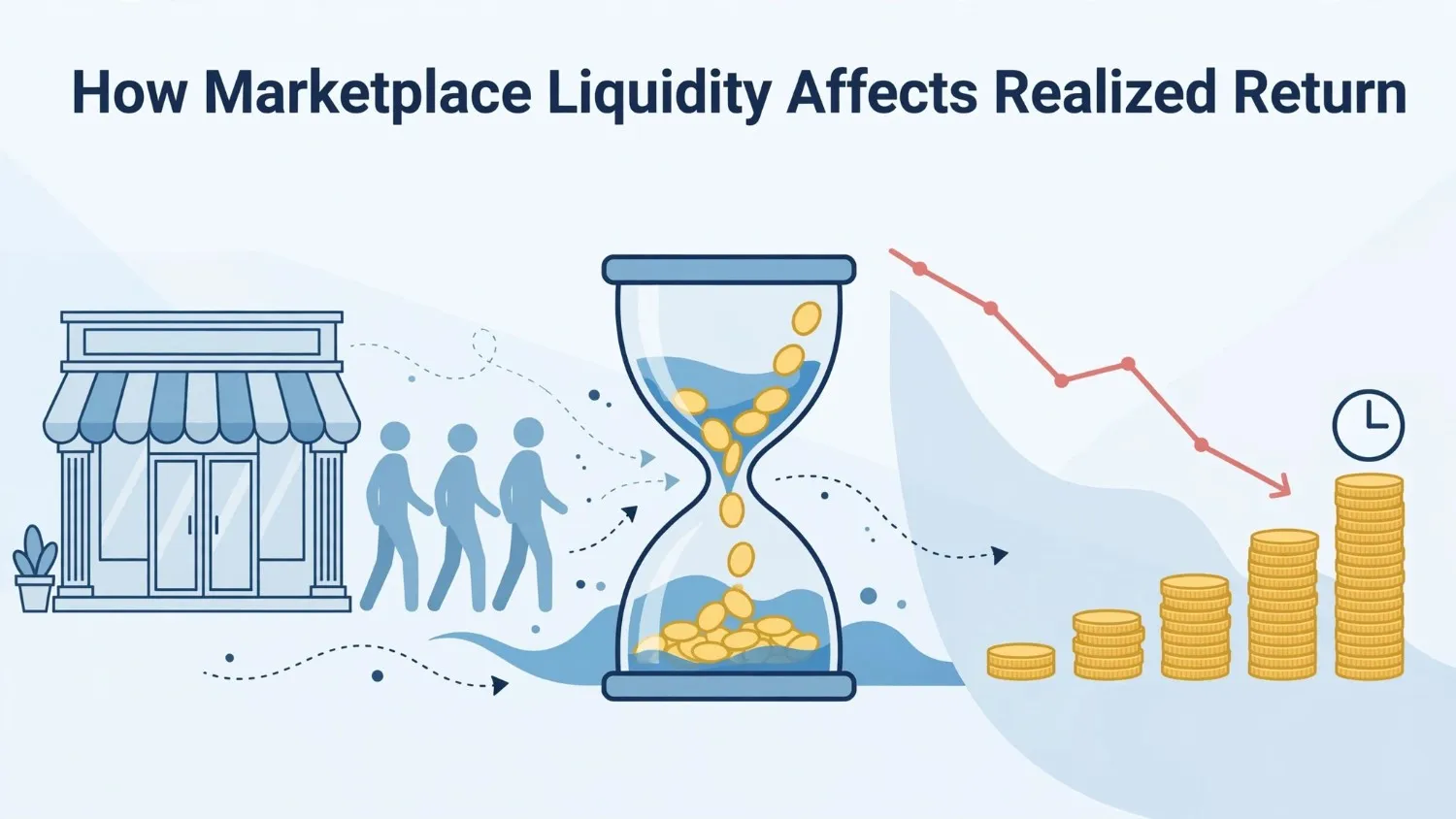
Liquidity – how quickly an asset can be converted to cash at a fair price – is arguably the most underappreciated variable in domain investment return calculations. Two names with identical structural quality can produce very different realized returns purely because one sits in a market segment with active buyer traffic and the other doesn’t.
Several liquidity signals are worth tracking before you buy:
Marketplace listing volume in the same pattern.
If very few comparable CVCVC .com names have sold in the past 12-18 months, that’s a signal of a thin market, regardless of how attractive the name looks in isolation.
Inbound inquiry frequency once listed.
Names with genuine brandability tend to generate unsolicited offers within the first few months of being actively marketed; names that sit silent for a year or more often indicate a mispriced or structurally weak asset.
Marketplace reputation and traffic.
Selling through an established, well-trafficked marketplace with a track record in short-domain sales generally produces faster, better-priced outcomes than listing on a low-traffic personal site alone.
Illiquidity doesn’t just delay a sale – it directly reduces annualized return, since every additional year of holding adds renewal cost without adding sale proceeds. A domain that would have produced a strong 45% net return sold in year two can quietly become a mediocre 12% annualized return if it instead takes six years to find a buyer.
Factors That Actually Move the Needle on Return
Sales data alone doesn’t explain why certain names outperform. Several structural and market factors consistently correlate with stronger resale multiples.
1. Phonetic Structure
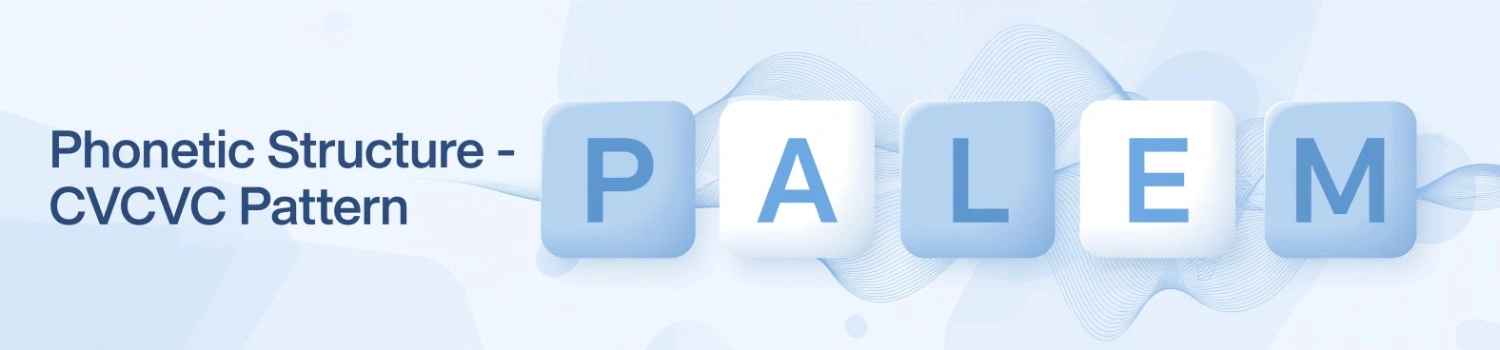
Names that follow consonant-vowel patterns – particularly CVCVC – read as “real words” even when they’re invented, which widens the buyer pool considerably. Our detailed explainer on why CVCVC is the most sought-after 5-letter pattern covers this in more depth, but the short version: pronounceability directly correlates with faster resale.
2. Pronounceability and Phonetic Value
A name a person can say out loud in a meeting, a podcast ad, or a voice search query has functional value beyond aesthetics. The article on pronounceable domain phonetic value explains how appraisers and end-users weigh this factor when making offers.
3. Extension

.com remains the dominant driver of resale value in five-letter inventory. Country-code and newer gTLD five-letter names can still perform, but the buyer pool is meaningfully narrower, which tends to lengthen holding periods and compress achievable multiples.
4. Industry Applicability

A name that plausibly fits multiple industries (fintech, health, SaaS, consumer brand) tends to outperform a name that only makes sense in one narrow niche, simply because the addressable buyer pool is larger.
5. Absence of Trademark Conflict

Names that are clean of existing trademark claims sell faster and at less discount, since buyers – especially venture-backed startups – increasingly run legal clearance before finalizing a domain purchase.
6. Search and Social Handle Availability

A growing share of serious buyers now check whether a matching social media handle and a low-competition search landscape exist alongside the domain itself. A five-letter name that’s available as a .com but already heavily used as a handle elsewhere, or that returns a page of unrelated results in search, tends to draw softer offers than one with a genuinely clean footprint across channels.
7. Macro Naming Cycles by Sector

Different sectors move through naming fashion cycles at different speeds. Fintech and SaaS buyers have historically gravitated toward crisp, invented CVCVC strings, while consumer health and wellness brands often favor slightly softer, vowel-heavy patterns. Understanding which sectors are actively naming new companies in a given year can help you anticipate where genuine end-user demand – not just investor speculation – is likely to concentrate next.
Common Mistakes That Quietly Kill ROI
Even structurally strong domains underperform when investors make avoidable errors. The most frequent ones seen in aftermarket transaction patterns include:
- Overpaying at acquisition based on speculative comps. Citing one outlier sale to justify a high purchase price inflates your break-even point and stretches your holding period.
- Ignoring renewal costs over multi-year holds. A $50 annual renewal fee sounds trivial until it’s compounded across a 5-7 year hold with no sale.
- Listing at unrealistic prices. Overpricing doesn’t just delay a sale – it signals inexperience to serious buyers and can suppress genuine offers.
- Skipping proper valuation before listing. Sellers who guess at pricing rather than benchmarking against comparable sales routinely leave money on the table or scare away qualified buyers entirely.
- Underestimating marketplace commission. Standard brokerage and marketplace fees typically range from 10% to 20% of sale price, and this needs to be modeled into your ROI expectations from day one, not treated as an afterthought.
- Buying based on personal taste rather than buyer demand. A name you personally find appealing isn’t the same as a name that fits a genuine naming pattern for startups or brands currently entering the market – these two things overlap less often than new investors expect.
- Neglecting to renew inventory-critical names on time. Losing a well-performing name to an expired renewal, sometimes due to an outdated payment method or missed notification, is an entirely avoidable but surprisingly common way investors erase years of accumulated gain in a single mistake.
- Failing to reassess a stagnant name’s thesis. Holding a name for years without revisiting whether the original acquisition rationale still applies – given shifting naming trends – can quietly turn a promising asset into dead capital.
Expert Tips for Setting Realistic ROI Expectations
- Model your break-even price, including renewal fees and expected commission, before you ever list a domain.
- Set a holding-period ceiling. If a name hasn’t attracted a serious inquiry within 3-5 years, reassess whether the acquisition thesis still holds.
- Diversify across a small portfolio rather than concentrating capital in a single “home run” name – portfolio-level returns are far more predictable than single-asset bets.
- Track comparable sales continuously, not just at the point of purchase, since buyer appetite for specific letter patterns shifts over time.
- Treat premium acquisitions differently from mid-tier ones. A $10,000+ purchase deserves a documented thesis (why this exact string, for which buyer, at what price) rather than an impulse buy.
- Keep a simple acquisition log. Recording your rationale, comparable sales used for pricing, and target exit range at the time of purchase makes it far easier to objectively evaluate performance later, rather than relying on memory or hindsight bias.
- Reassess pricing annually, not just at listing. Buyer appetite and comparable sales shift over time, and a price that was reasonable two years ago may now be either underpriced relative to current demand or stale enough to be actively discouraging inquiries.

Together, these habits shift domain investing from a series of isolated bets into a process you can actually measure, refine, and repeat – which is ultimately what separates investors who generate consistent returns from those who simply get lucky once.
Step-by-Step: Evaluating a 5-Letter Domain Before You Buy
- Check pronounceability. Say the name out loud to three people unfamiliar with it and see if pronunciation is consistent.
- Confirm the letter pattern. CVCVC and similar structures generally resell faster than irregular consonant clusters.
- Search for trademark conflicts across major jurisdictions before committing capital.
- Benchmark against recent comparable sales, not against the single highest sale you can find.
- Calculate your all-in cost – purchase price, escrow fees, and estimated multi-year renewal costs.
- Set a target resale range and timeline before you buy, not after.
For a more detailed walkthrough of the acquisition process itself, see our guide on how to buy a 5-letter domain step by step.
How Naming Trends Influence Long-Term Return
Brand naming trends shift over cycles, and five-letter inventory is not immune to fashion. Names that borrow phonetic cues from other successful brands – a recognizable rhythm, familiar vowel sounds, a certain “startup cadence” – tend to see spikes in buyer interest during periods when similar brand names are trending in venture-backed sectors. According to Verisign’s periodic Domain Name Industry Brief, overall domain registrations have continued to grow globally over recent years, which broadly supports sustained demand across short, brandable inventory even as individual naming trends rotate.
This is one reason diversification matters: a name perfectly suited to 2021’s fintech naming conventions may see softer demand in a different cycle, while a more evergreen, industry-agnostic name holds value more consistently.
Illustrative Outcome Patterns Across Holding Periods
Rather than citing individual transactions – which vary too widely to be representative on their own – it’s more useful to look at the pattern aggregated sales data tends to follow across a holding period. These illustrative scenarios reflect common, non-outlier trajectories seen across mid-tier acquisitions:
- Short hold, quick flip (under 12 months): Typically occurs when a name happens to match active, current-year naming demand in a specific sector. Returns can be strong, but this pattern is opportunistic rather than reliably repeatable, since it depends on timing a buyer’s need almost exactly.

- Standard hold (2-4 years): The most common profitable pattern in the data. The investor lists steadily, adjusts pricing based on inquiry volume, and eventually finds a qualified buyer once the right company reaches its naming stage. Net ROI in this pattern tends to land within the 20%-80% band referenced earlier.
- Extended hold (5+ years): Occurs when a structurally sound name simply hasn’t found its buyer yet, often due to a narrow niche or a slower-moving sector. These holds can still resolve profitably, but the accumulated renewal cost meaningfully erodes annualized return even when the eventual gross sale figure looks appealing.
- No resale / write-off: A meaningful share of hand-registered, structurally weak names never sell at all and are eventually allowed to lapse. This outcome is far more common at the sub-$500 acquisition tier than in curated mid-tier or premium purchases, which is precisely why acquisition discipline matters more than volume.
Recognizing which pattern a given name is likely to follow – based on its structural quality and the liquidity of its specific niche – is a more useful planning exercise than anchoring on any single reported sale.
Regional and Extension-Level Variance in Return
Return expectations also shift meaningfully depending on the target extension and the primary market a buyer is likely to come from.
- .com inventory continues to command the deepest buyer pool globally, which generally translates into both faster resale and stronger achievable multiples compared to other extensions.
- Country-code extensions (such as regional ccTLDs) can perform well when the buyer pool is specifically local or regional, but international resale demand is typically much thinner, which narrows the realistic exit strategy.
- Newer gTLDs occasionally see pockets of strong demand tied to specific industries, but historically show less consistent aftermarket liquidity for five-letter strings compared to legacy extensions, and should generally be treated as a smaller, higher-risk allocation within a portfolio rather than a core holding.
Investors building a serious five-letter portfolio typically weight the majority of capital toward .com inventory specifically because the data shows more predictable, repeatable outcomes there than in any other single extension category.
Comparison: Mid-Tier vs. Premium 5-Letter Domain Investment Strategy
| Factor | Mid-Tier Strategy ($500–$3,000) | Premium Strategy ($15,000+) |
|---|---|---|
| Capital required per name | Lower, easier to diversify | Higher, concentrated risk |
| Typical holding period | 2–4 years | 6 months – 2 years |
| Realistic ROI range | 20%–80% | Highly variable, occasionally much higher |
| Buyer pool | Broad, generic brandability | Narrow, specific end-user demand |
| Risk profile | Lower variance, more predictable | Higher variance, headline outcomes possible |
| Best suited for | Investors building a diversified portfolio | Investors with strong end-user identification skills |
Where Escrow and Transfer Logistics Affect Net Return
A frequently overlooked component of real return is transaction execution. Using a licensed escrow service protects both parties during a sale but adds a fee that must be factored into your net ROI calculation. Platforms such as Escrow.com are commonly used in the domain aftermarket specifically because they hold funds until the domain transfer is verified, which reduces fraud risk on higher-value transactions – though the added fee, typically a percentage of sale price, should always be built into your break-even math rather than treated as a rounding error.
Building a Diversified 5-Letter Domain Portfolio
Single-asset speculation is where most of the volatility in domain investing lives. Spreading capital across a small, deliberately varied portfolio tends to smooth out realized return considerably, for reasons that mirror any other asset class.

A reasonable starting framework:
- Allocate the majority of capital to mid-tier acquisitions. Since this tier shows the most consistent ROI band in aggregated sales data, it should typically form the core of a portfolio rather than the exception.
- Reserve a smaller portion for one or two premium, high-conviction names where you can articulate a specific end-user thesis – a particular industry, a particular naming trend, a particular gap in available inventory.
- Vary letter patterns and industries slightly across holdings, rather than buying ten near-identical CVCVC names aimed at the same narrow sector, since demand concentration in a single niche raises correlated risk across your whole portfolio.
- Stagger acquisition dates so that renewal costs and reassessment points don’t all land in the same calendar year, which also gives you flexibility to react to shifting naming trends as they emerge.
This approach won’t produce the single headline flip that generates forum attention, but it consistently produces a more predictable blended return – which is the actual goal for anyone treating domains as a genuine investment category rather than a hobby.
Tax and Accounting Basics for Domain Investment Return
Realized gains on domain sales are generally treated as taxable income or capital gains depending on your jurisdiction, how frequently you buy and sell, and whether the activity is classified as a business or an individual investment. Renewal fees, marketplace commissions, and escrow costs are typically deductible business expenses where domain investing is conducted as a formal activity, which further underscores why tracking net ROI – not gross ROI – is the financially accurate way to evaluate performance.

Because tax treatment varies significantly by country and by how your activity is structured, it’s worth consulting a qualified tax professional familiar with digital asset transactions before finalizing your return calculations, particularly once your portfolio grows beyond a handful of names.
FAQ: 5 Letter Domain Investment Return
Q: What is a realistic 5 letter domain investment return over a multi-year hold?
A: Based on aggregated aftermarket sales data, a realistic range is 15%-40% annualized for well-selected, pronounceable names, with mid-tier acquisitions ($500-$3,000) showing the most consistent outcomes.
Q: How long does it typically take to resell a 5-letter domain profitably?
A: Most profitable resales occur within 2-5 years, though premium-tier names with identified end-user demand can sell faster, sometimes within months.
Q: Do all 5-letter domains appreciate in value?
A: No. A significant share of hand-registered or poorly structured names never resell at all. Structural quality – pronounceability, letter pattern, and extension – is the strongest predictor of eventual appreciation.
Q: What fees should I subtract when calculating my actual ROI?
A: Renewal fees across the holding period, marketplace or broker commissions (typically 10%-20%), and any escrow service fees should all be deducted from gross sale price to determine true net return.
Q: Is CVCVC really the best-performing pattern for return on investment?
A: CVCVC and similar pronounceable patterns consistently show stronger resale performance in sales data because they read as real, sayable words, which widens the potential buyer pool considerably.
Q: Should I focus on mid-tier or premium acquisitions if I’m new to domain investing?
A: Most new investors see more predictable, risk-adjusted results starting in the mid-tier range, where holding periods and ROI bands are far more consistent, before allocating any capital to higher-priced, higher-variance premium names.
Q: Does liquidity really affect my final return, or just the timeline?
A: Both. Illiquidity extends holding time, which directly compounds renewal costs and lowers your annualized return even when the eventual gross sale price looks strong.
Q: How many 5-letter domains should a beginner portfolio include?
A: There’s no universal number, but starting with a small, deliberately varied set of mid-tier names – rather than concentrating all capital in one speculative premium purchase – tends to produce steadier, more measurable outcomes while you build experience reading buyer demand.
Final Thoughts: Setting ROI Expectations That Hold Up

The sales data doesn’t support the idea that every five-letter domain purchase becomes a life-changing flip. It does support something more useful: a repeatable, moderately attractive return profile for investors who buy structurally sound names at disciplined prices and hold with a realistic timeline in mind. Treat renewal costs and commissions as part of your math from day one, diversify rather than concentrating on a single speculative bet, and benchmark against genuine comparable sales rather than headline outliers.
If you’re ready to build a portfolio around names with the structural characteristics that actually correlate with stronger resale performance, and start with acquisition data instead of guesswork.