
A 5 letter domain for fintech gives startups a shorter, more brandable, and more trustworthy web address than any keyword-stuffed alternative, and that trust compounds directly into conversion rate and valuation. Investors, regulators, and everyday users size up a financial brand within seconds, and a clean, pronounceable name signals stability before a single feature is explained. This is why an increasing share of seed-to-Series-B fintech founders are quietly abandoning “bestcryptowallet.com”-style URLs in favor of short, ownable names.
Choosing the right web address is no longer a cosmetic decision; it sits alongside your fundraising deck and your compliance filings as a core brand asset. Founders researching this shift often start at Aufic’s collection of 5 Letter Domains for Sale, where pronounceable, trademark-friendly options are pre-screened for exactly this use case. The rest of this guide unpacks why short domains are winning, how to evaluate one, and which mistakes to avoid before you buy.
What is a 5 Letter Domain for Fintech, Exactly?
A 5 letter domain for fintech is a five-character .com address, typically free of hyphens or numbers, built to function as a standalone brand name rather than a description of the service. Examples follow patterns such as CVCVC (consonant-vowel-consonant-vowel-consonant), which linguists and namers agree is the easiest structure for the human brain to read, say, and remember.
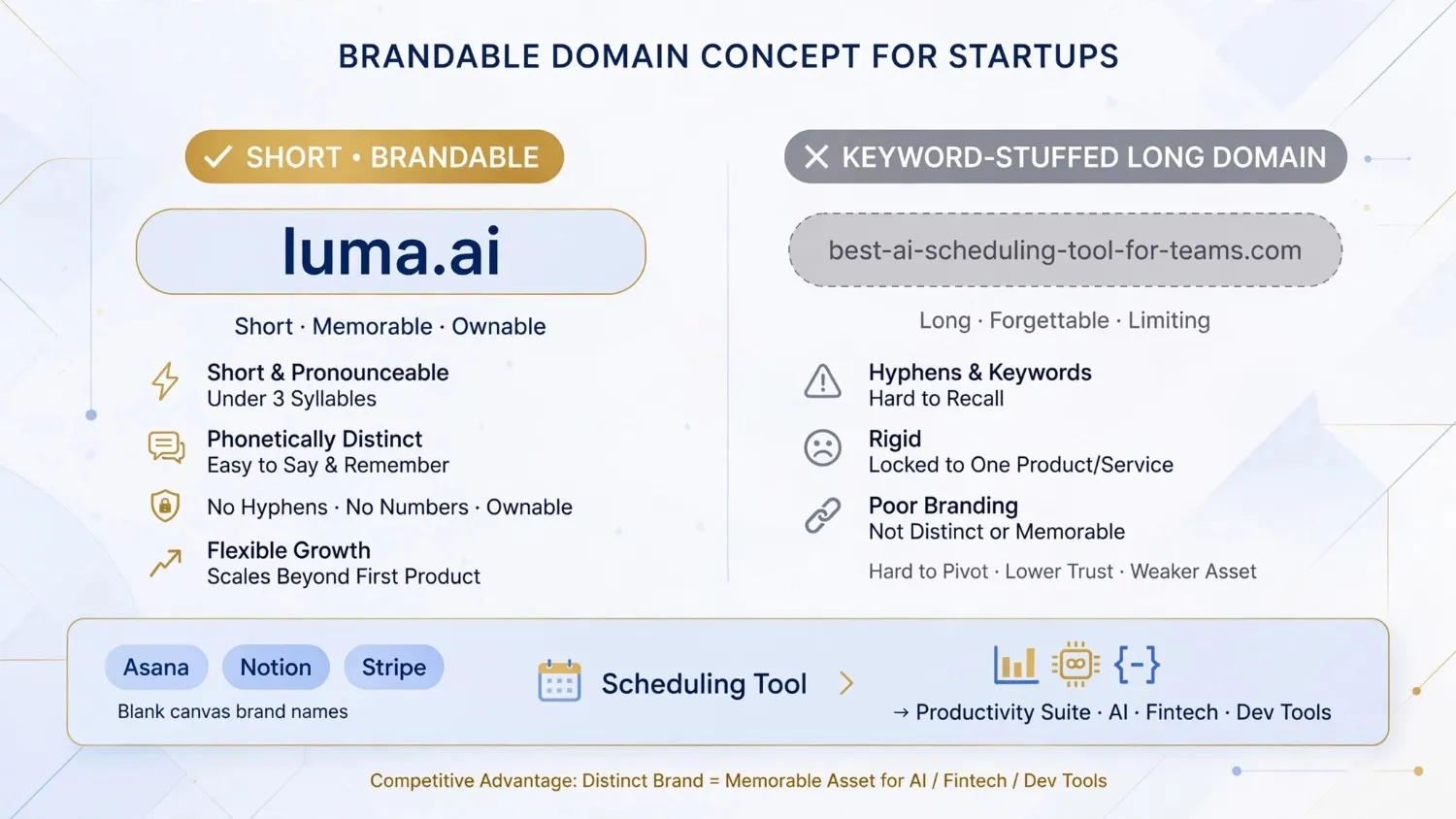
Unlike “onlinepaymentsapp.com” or “besttradingplatform.net,” a 5-letter name carries no built-in meaning. That absence of meaning is the point: it becomes a blank canvas the company fills with its own reputation, the same way “Visa” or “Plaid” once meant nothing until the brand gave the word weight.
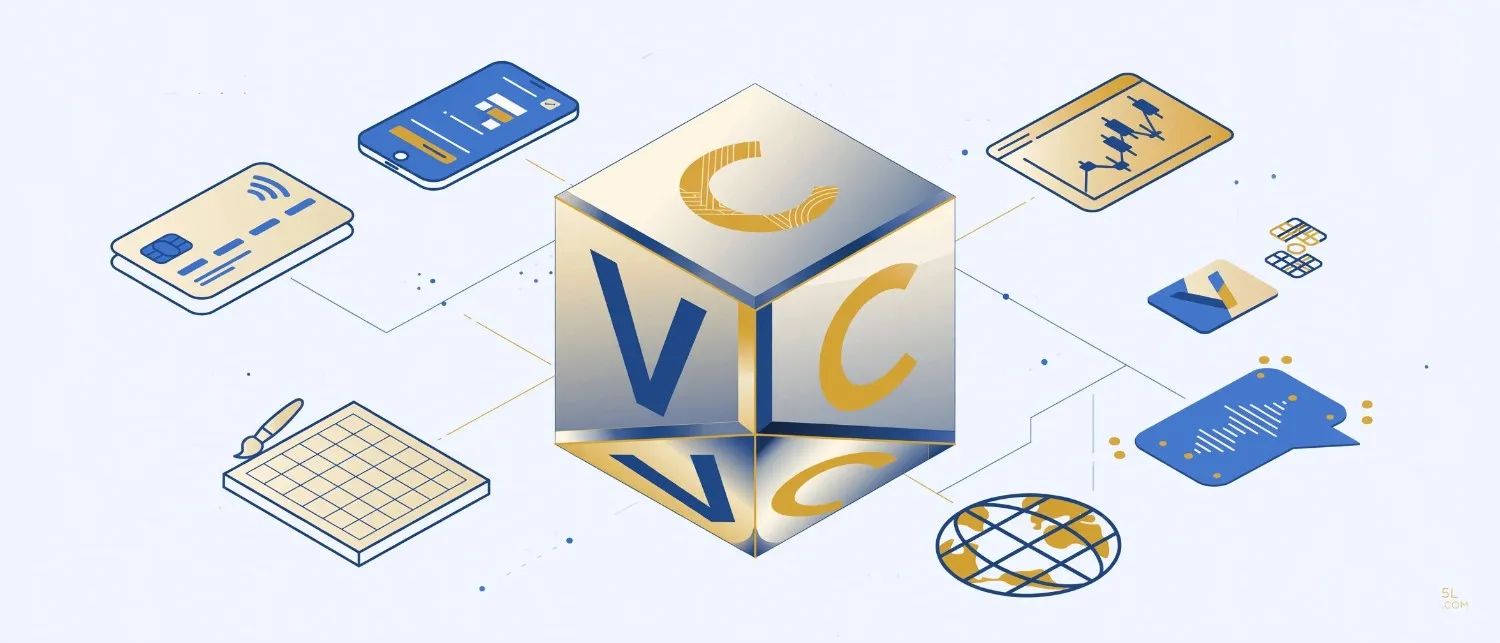
Key Characteristics Fintech Buyers Look For
- Pronounceability – can a stranger read it aloud correctly on the first try?
- .com availability – the extension still dominates trust perception in finance
- No trademark conflicts – critical for a regulated industry
- Phonetic memorability – so it survives word-of-mouth referrals
- Global neutrality – no unintended meaning in major markets
Why Fintech Startups Are Moving Away From Keyword-Rich Domains
Keyword-rich domains such as “fastloanapproval.com” once ranked well simply by matching a search query verbatim. That advantage has steadily eroded, and fintech founders are among the first to notice, largely because their category is scrutinized more heavily than most for trust signals.
1. Search Engines No Longer Reward Exact-Match Keywords

Google’s own guidance on creating helpful, people-first content makes clear that ranking now depends on demonstrated expertise, experience, authority, and trust, not on keyword placement tricks. A domain packed with keywords now reads as a spam signal rather than a ranking asset, especially when the underlying content doesn’t back it up.
2. Investors Read Domain Names as a Maturity Signal

Consequently, a startup pitching seed or Series A capital under a name like “cheapstockstrading.net” faces an uphill battle before the pitch even starts. Short, brand-style names read as more mature, more fundable, and more acquisition-ready, because they resemble the naming conventions of Stripe, Plaid, Chime, and Brex.
3. Trust Is the Actual Fintech Currency

Furthermore, financial products ask users to hand over sensitive data and money. A keyword domain can unconsciously read as a lead-gen site or comparison blog rather than a real financial institution. A short, coined name, backed by a clean design system, signals “we are the product,” not “we are ranking for a phrase.”
4. Long Domains Hurt Mobile Conversion

On mobile screens, long domains truncate in browser bars, get mistyped, and look cluttered in app store listings, email signatures, and QR codes. A 5 letter domain for fintech fits cleanly everywhere a brand needs to appear, from a debit card to a push notification.
5. Brand Expansion Becomes Nearly Impossible With Keyword Domains

Additionally, a name like “instantloanapp.com” locks a company into loans forever. The moment the startup adds payroll, insurance, or investing products, the domain actively works against the pivot. A neutral 5-letter name expands with the business instead of constraining it.
Comparison Table: 5-Letter Domains vs Keyword-Rich Domains
| Factor | 5-Letter Domain | Keyword-Rich Domain |
|---|---|---|
| Brand memorability | High | Low to moderate |
| Trust perception (fintech) | Strong | Weak, often reads as a lead-gen site |
| SEO advantage today | Neutral (earned through content) | Diminishing, occasionally penalized |
| Scalability across products | Excellent | Poor, locked to original keyword |
| Trademark registrability | Generally strong | Often weak or descriptive |
| Investor perception | Positive, signals maturity | Can signal early-stage or niche |
| Typical acquisition cost | Moderate to premium | Low to moderate |
| Mobile/app store fit | Clean and short | Frequently truncated |
The CVCVC Advantage: Why Pattern Matters More Than Length Alone
Not every five-letter string performs the same way. Names such as “Kolan,” “Rivex,” or “Zumat” follow a phonetic rhythm the brain processes faster than random letter clusters. This is explained in depth in our breakdown of why CVCVC domain structure is the most sought-after 5-letter pattern, which remains one of the most consistent value drivers buyers cite before purchase.
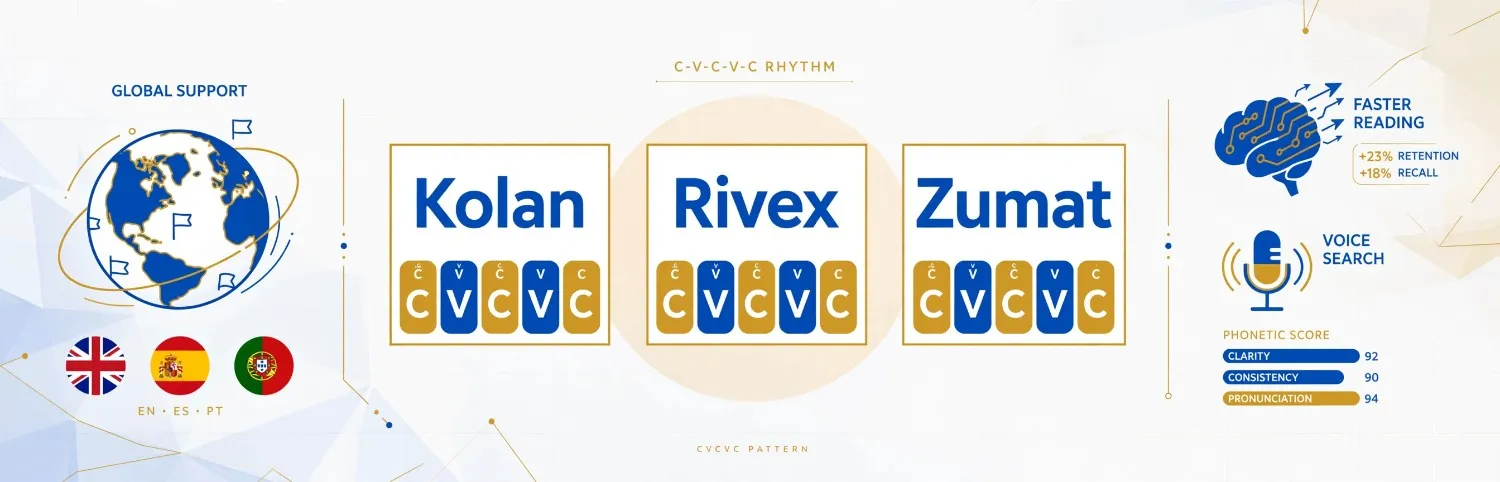
Fintech founders specifically favor CVCVC and CVCCV patterns because:
- They read as words even though they are coined.
- They translate cleanly across English, Spanish, and Portuguese-speaking markets, key for fintech’s cross-border ambitions.
- They avoid awkward consonant clusters that slow down voice search and call-center pronunciation.
- They score well in domain appraisal models that weight phonetic value, a factor covered further in this guide to pronounceable 5-letter domain phonetic value.
The Psychology of Trust in Financial Branding
Trust in fintech is not built through a single feature, it accumulates through dozens of micro-signals a user processes in the first few seconds of encountering a brand. The domain name is often the very first of those signals, arriving before the logo loads, before the homepage renders, and long before a single testimonial is read.
Behavioral researchers have long observed that fluency, meaning how easily the brain processes a stimulus, correlates directly with perceived trustworthiness. A name that reads smoothly and sounds natural when spoken aloud is processed with less cognitive friction than a long, hyphenated, keyword-stuffed string. In practice, this means a 5 letter domain for fintech isn’t just aesthetically cleaner, it is measurably easier for a stranger’s brain to trust on first contact.
This matters even more in fintech than in most other categories because the product itself is intangible. A user cannot see or touch a loan, an investment account, or a payments rail the way they can inspect a physical product. The brand name becomes one of the few tangible anchors available, and founders who understand this treat the domain as a trust asset rather than a technical placeholder.
Why Regulated Industries Are Especially Sensitive to This Signal
Financial services sit inside one of the most heavily regulated and scrutinized digital categories, alongside healthcare and legal services. Users have been trained by years of phishing attempts and scam sites to distrust anything that looks engineered purely to rank in search results. A domain like “guaranteedloanapproval-fast.com” triggers exactly the pattern-matching a cautious user has learned to avoid, even if the underlying company is entirely legitimate.
Real-World Patterns: How Established Fintech Brands Approached Naming
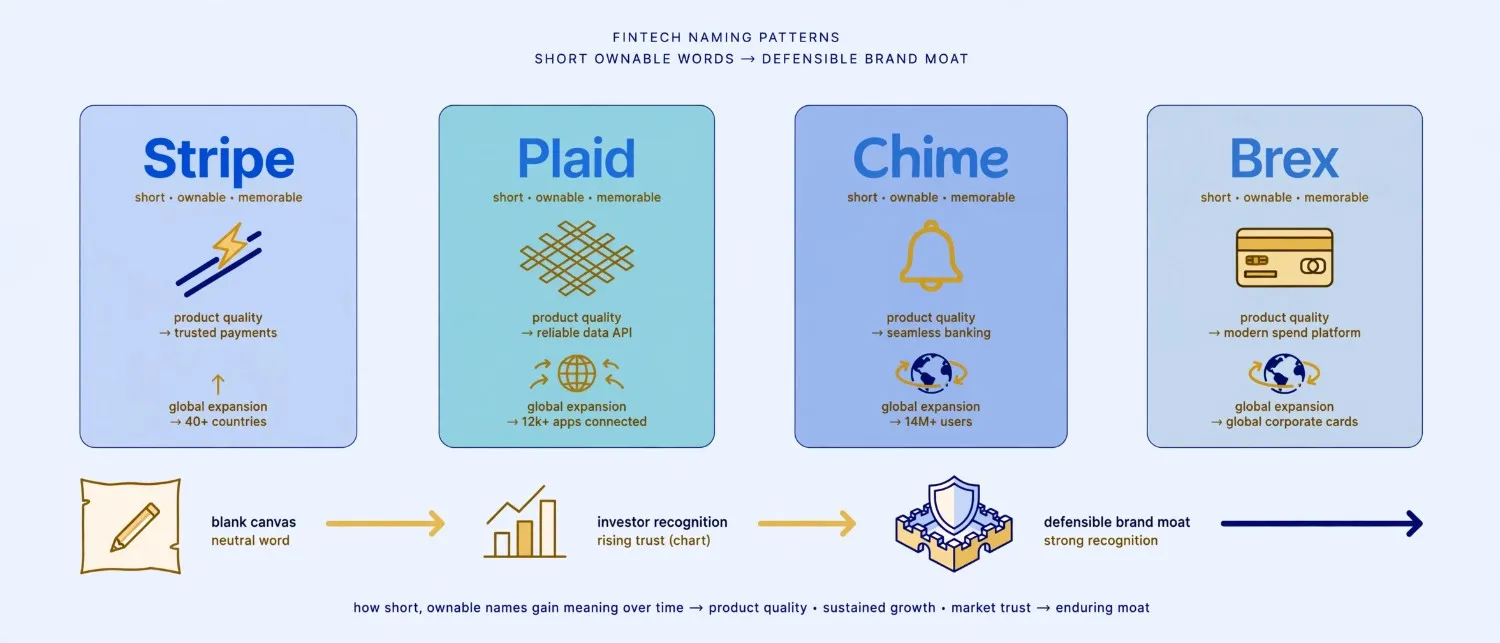
Looking at the broader fintech landscape, a clear naming pattern emerges among the category’s most recognized players. Names like Stripe, Plaid, Chime, and Brex share almost nothing in common with the service they describe on a literal level, yet each has become synonymous with a category of financial product simply through consistent execution.
This is not a coincidence, it is a deliberate naming strategy. Rather than describing the product, these brands chose short, ownable words and then spent years pouring meaning into them through product quality, customer experience, and marketing. A short 5-letter domain gives a startup the same blank canvas, along with the flexibility to expand into adjacent financial products without the domain actively working against the pivot.
What Newer Fintech Startups Can Learn From This Pattern
- Meaning is built, not borrowed. A keyword domain borrows meaning from a search phrase; a coined domain builds its own meaning over time, which becomes a defensible brand moat.
- Short names travel better internationally. As a company expands into new markets, a neutral coined name avoids translation or connotation issues that a literal English keyword phrase often carries.
- Investors recognize the pattern. Venture investors have seen enough successful fintech exits to associate short, brandable names with founders who are thinking several stages ahead, not just about launch-day SEO.
Domain Age, Backlink Equity, and Why Premium Aftermarket Domains Carry Extra Value
A domain acquired through the aftermarket often carries additional value beyond the letters themselves. Domain age, historical backlink profiles, and prior indexing by search engines can all contribute to a smoother initial ranking trajectory, provided the domain’s history is clean.
This is why a rigorous history check, as outlined earlier in the evaluation checklist, matters so much. A premium 5-letter domain that has sat parked or under a neutral holding page for years, with no spam history, can behave differently in search results than a brand-new registration, even though both are technically “new” from the buyer’s perspective as a live business.
Factors That Influence a Domain’s Aftermarket Value
| Value Factor | Why It Matters |
|---|---|
| Registration age | Older domains can carry a modest trust signal with search engines |
| Backlink history | Clean, relevant historical links can support faster ranking |
| Prior use case | A domain never associated with spam or adult content is safer |
| Extension | .com carries the strongest trust weight in financial services |
| Letter pattern | CVCVC and similarly fluent patterns command higher resale premiums |
| Brandability | Names that work as a standalone brand, not just a URL, hold value longest |
Common Myths About 5-Letter Domains, Debunked
Founders new to the aftermarket domain space often carry over assumptions from a decade-old understanding of SEO. A few of the most persistent myths deserve direct correction.
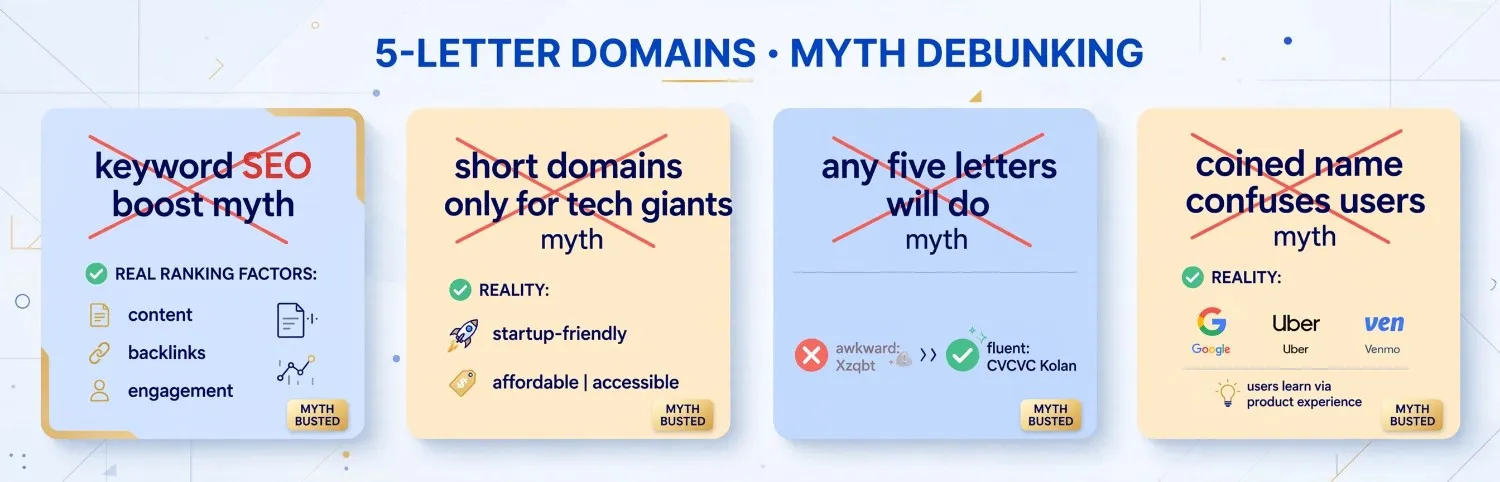
Myth 1: A keyword in the domain still gives a big SEO boost.
In reality, modern ranking systems weigh content quality, backlinks, and user engagement far more heavily than any keyword sitting inside the URL itself.
Myth 2: Short domains are only for tech giants with big budgets.
In reality, mid-market and early-stage fintech startups regularly acquire strong 5-letter names at price points comparable to a single month of paid ad spend.
Myth 3: Any five letters will do, as long as it’s available.
In reality, pronounceability and pattern matter enormously, an available but awkward string like “Xzqbt” carries none of the branding value of a fluent CVCVC name.
Myth 4: A coined name confuses users about what the company does.
In reality, users learn what a brand means through the product experience, not the domain, exactly as they did with Google, Uber, or Venmo.
Practical Insights: How Fintech Buyers Evaluate a Domain Before Purchase
Before wiring funds for a premium domain, most serious fintech buyers run through a short but rigorous checklist. Below is the process our team sees repeated across dozens of acquisitions.
Step-by-Step Evaluation Process
- Say it out loud to five strangers. If more than one mispronounces it, reconsider.
- Check global trademark databases in your target jurisdictions, not just your home country.
- Search social handle availability across at least three major platforms.
- Run a reverse domain history check to confirm the name was never associated with spam or blacklisted content.
- Verify the exact registrar and transfer lock status before final payment.
- Confirm .com is the primary asset, since alternate extensions rarely carry the same trust weight in finance.
- Budget for legal trademark filing immediately after acquisition, not months later.
Quick Reference: What “Good” Looks Like
- Pronounceable in under one second
- Five letters, no hyphen, no number
- .com extension confirmed
- Clean WHOIS and backlink history
- No existing trademark collision in your sector
Common Mistakes Fintech Founders Make When Choosing a Domain
Even well-funded teams stumble here, usually because domain decisions get rushed in the final weeks before launch.
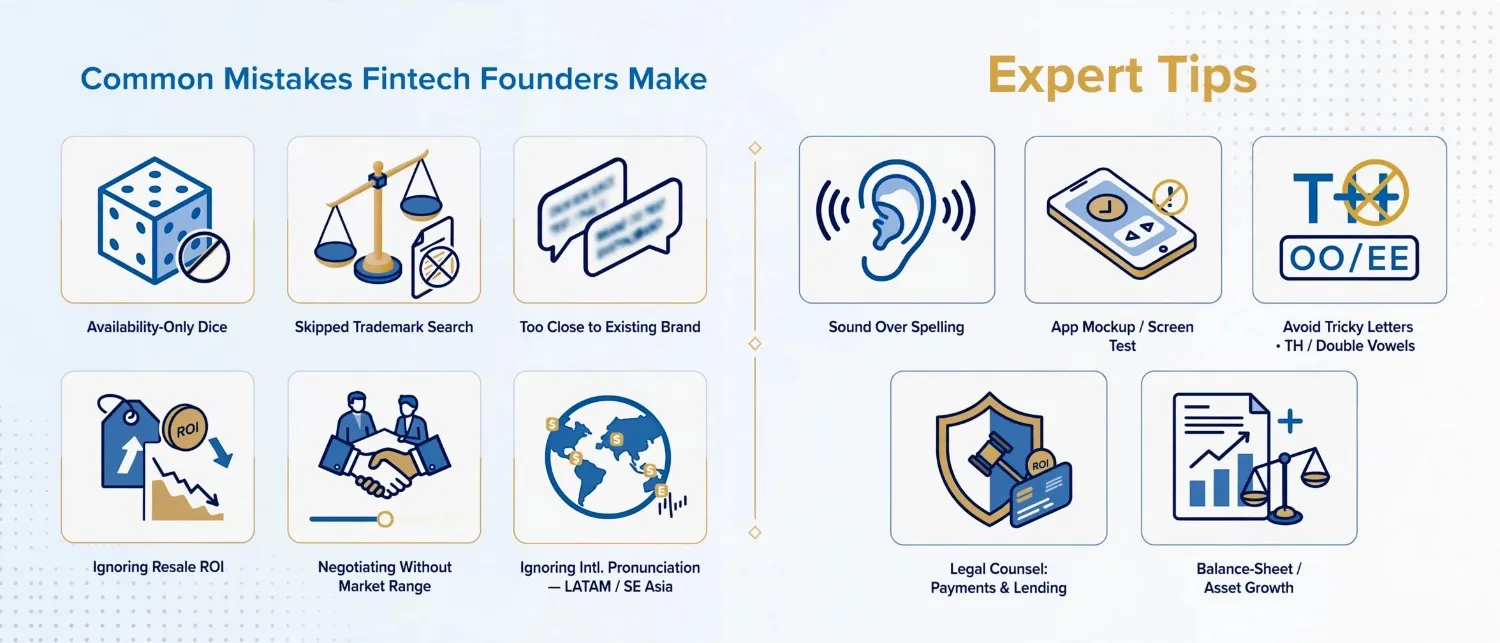
- Buying based on availability alone, ignoring pronounceability entirely.
- Skipping a trademark search, which can trigger a costly rebrand 12–18 months post-launch.
- Choosing a name too close to an existing fintech brand, inviting confusion or legal action.
- Underestimating resale and ROI potential, a topic explored in detail in our piece on ROI expectations for 5-letter domain investments.
- Negotiating price without understanding the market range, covered thoroughly in this 5-letter domain cost and price range breakdown.
- Ignoring international pronunciation, which matters heavily for fintechs expanding into LATAM or Southeast Asia.
Expert Tips for Selecting the Right 5-Letter Domain
Based on patterns observed across successful fintech launches, a few practical tips consistently separate strong acquisitions from regretted ones:
Tip 1: Prioritize sound over spelling.
A name that sounds trustworthy read aloud will outperform one that merely looks clever written down.
Tip 2: Test the name inside a fake app screen mockup
You can test the name or imagine that, how exactly it will look like, before buying, since branding lives on screens, not just in a browser bar.
Tip 3: Avoid letters that vary in pronunciation across accents
You should avoid the letters that vary or uncommon in pronunciation such as heavy reliance on “th” or double vowels.
Tip 4: Involve legal counsel before, not after, the purchase
You should involve the legal help before buying the domain, not after, the purchase, particularly for anything touching payments, lending, or custody of funds.
Tip 5: Treat the domain as a balance-sheet asset
Treat the domain as a balance-sheet asset, not a marketing line item, since resale value compounds the same way real estate does.
How to Actually Buy One: A Simplified Walkthrough
For founders new to the domain aftermarket, the process feels unfamiliar at first. A full walkthrough is available in our step-by-step guide to buying a 5-letter domain, but the shortened version looks like this:
- Shortlist 10-15 candidate names using phonetic and brand-fit criteria.
- Run trademark and WHOIS checks on each.
- Request pricing or make an offer through a verified marketplace or broker.
- Use an escrow service for the transaction, never a direct wire to an unverified seller.
- Transfer to your preferred registrar and lock the domain immediately.
- File trademark protection in your primary operating jurisdiction within 30 days.
Naming Rules That Keep the Domain Legally and Phonetically Sound
A domain that looks good on a slide deck can still fail in the real world if it breaks basic phonetic branding rules. These principles, expanded in our phonetic brand name rules for memorable 5-letter domains, include:
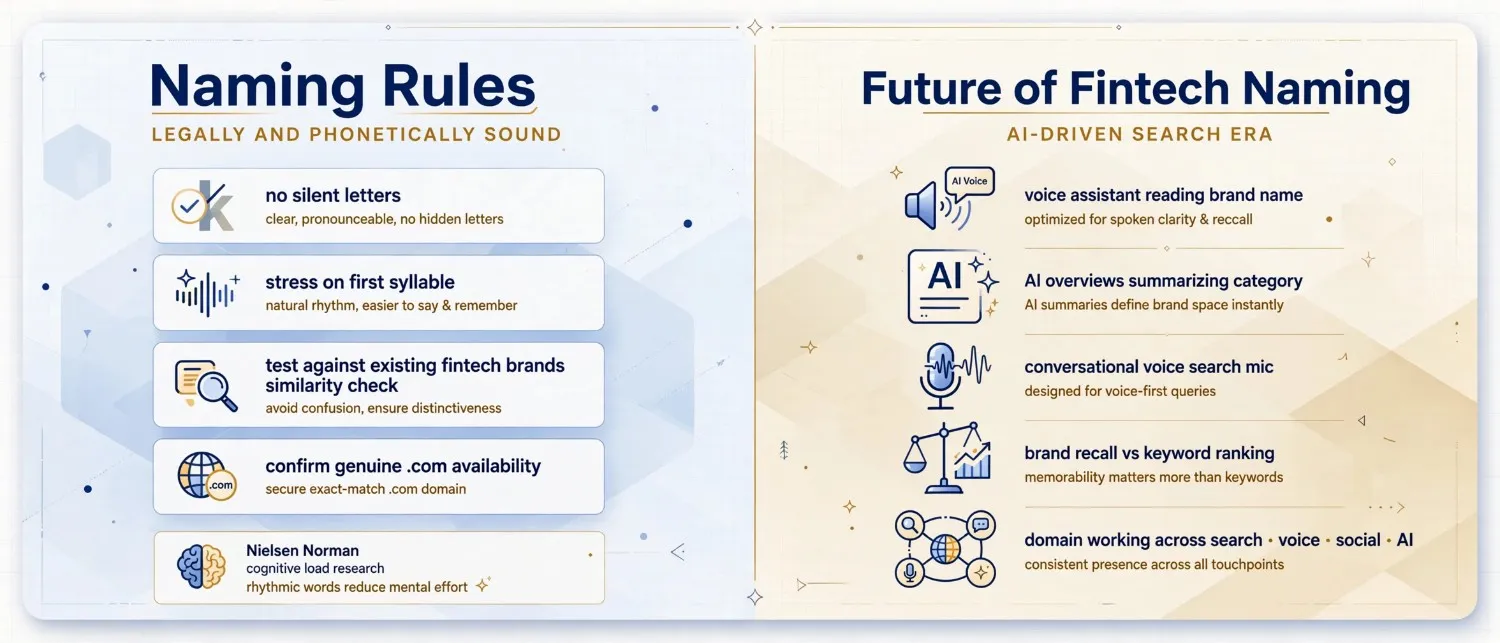
- Avoid silent letters that confuse spelling from sound.
- Keep stress on the first syllable for faster recall.
- Test the name against existing fintech brand names for accidental similarity.
- Confirm the .com is genuinely available, not simply unregistered on a lesser extension.
Industry namers, including those referenced by the Nielsen Norman Group’s research on usability and cognitive load, consistently find that shorter, rhythmic words reduce the mental effort required to recall and trust a brand, a principle that applies directly to domain selection in high-trust categories like finance.
The Future of Fintech Naming in an AI-Driven Search Era
Search behavior itself is shifting toward conversational and voice-driven queries, and AI-powered assistants increasingly read brand names aloud or reference them directly in generated answers. This shift raises the stakes for pronounceability even further, since a voice assistant mispronouncing a keyword-stuffed domain creates an immediate credibility gap that a clean, coined name simply doesn’t encounter.
As AI Overviews and agentic search tools summarize entire categories rather than listing ten blue links, brand recall becomes more important than exact-match keyword ranking. A user who hears or reads a short, memorable fintech name inside an AI-generated summary is far more likely to type it directly into a browser later, a behavior pattern that keyword domains, ironically, are poorly suited to capture since they were never designed to be remembered as a standalone word.
What This Means for Founders Buying a Domain Today
- Prioritize a name that performs well when read aloud by a voice assistant, not just when typed into a search bar.
- Treat the domain as a long-term brand asset that will need to function across search, voice, social, and AI-summarized contexts simultaneously.
- Avoid names that depend entirely on ranking for a single keyword phrase, since that advantage is shrinking every quarter as search interfaces evolve.
Why .com Still Wins in Financial Services
Alternate extensions have grown in popularity for tech and consumer brands, but fintech remains an exception. Regulatory bodies, banking partners, and payment processors overwhelmingly default to .com when validating a company’s legitimacy. According to registry guidance published by Verisign, .com continues to be the most recognized and trusted top-level domain globally, which matters enormously when a fintech is asking a user to link a bank account.
Frequently Asked Questions
Why do fintech startups prefer a 5 letter domain over a keyword-rich one?
A 5 letter domain for fintech reads as a real brand rather than a marketing page, which builds the trust financial products depend on to convert hesitant users.
Are short domains better for SEO than keyword domains?
Modern search ranking depends far more on content quality, backlinks, and user experience than on keywords baked into the URL, so a short domain carries no inherent SEO penalty.
What makes a 5-letter domain valuable for a fintech company?
Pronounceability, a CVCVC or similar phonetic pattern, confirmed .com availability, and a clean trademark profile are the core value drivers buyers should check first.
How much does a good 5-letter fintech domain typically cost?
Prices vary from a few hundred dollars for less common letter strings to five or six figures for premium, highly pronounceable CVCVC names; a full breakdown is available in Aufic’s cost and price range guide.
Can a 5-letter domain be trademarked for a fintech brand?
Yes, a coined and distinctive 5-letter name is generally easier to register than a descriptive keyword domain, though a jurisdiction-specific legal check is always recommended before filing.
Does a short domain still help with SEO in 2026?
A 5 letter domain for fintech won’t rank on its own, but it removes friction for backlinks, brand searches, and word-of-mouth referrals, all of which remain strong ranking signals when paired with genuinely helpful content.
Should an early-stage fintech founder buy a premium domain before or after fundraising?
Many founders acquire the domain before a public launch or fundraising round, since a strong brand name can reinforce investor confidence during pitch meetings, though the decision ultimately depends on available budget at each stage.
Is it risky to buy a 5-letter domain from a previous owner instead of registering a brand-new one?
It can be safe and even advantageous, provided a thorough history check confirms the domain was never associated with spam, adult content, or blacklisting, which is why the evaluation checklist earlier in this guide is worth following closely.
Conclusion
Ultimately, the shift away from keyword-rich domains isn’t a passing trend, it reflects how fintech buyers, investors, and search engines all now evaluate the same signal: does this name feel like a real, trustworthy company? A 5 letter domain for fintech answers that question the moment someone reads it, before a single feature or fee schedule is explained. Founders serious about building a fundable, scalable financial brand should and lock in a name before a competitor claims it first.