
The startup name criteria that separate a forgettable label from a category-defining brand come down to seven measurable traits: pronounceability, memorability, extensibility, trademark clearance, emotional resonance, digital availability, and length. Among these, length is the criterion founders underestimate most, since a short, clean domain often decides whether a name survives contact with the real world. This guide breaks down each of these standards individually, so you can pressure-test your own startup name before you commit a single rupee to branding, legal filings, or a domain purchase.

Before you shortlist names, it helps to understand what a short, brandable domain actually looks like in practice – the kind of asset that satisfies most of these criteria at once, such as the 5 letter domain names for sale currently listed on our marketplace.
What Makes a Startup Name “Successful,” Exactly?
A successful startup name is one that a stranger can hear once, spell correctly, and recall a week later without prompting. That single test filters out roughly 80% of the names founders bring to branding consultants.

In practical terms, a name meeting solid startup name criteria will:
- Be understood correctly the first time it’s spoken aloud
- Fit naturally into a sentence, a pitch deck, and a domain bar
- Leave room for the company to grow beyond its first product
- Clear trademark and domain checks without expensive workarounds

In practical terms, a name meeting solid startup name criteria will:
- Be understood correctly the first time it’s spoken aloud
- Fit naturally into a sentence, a pitch deck, and a domain bar
- Leave room for the company to grow beyond its first product
- Clear trademark and domain checks without expensive workarounds

If a name fails even one of these, it usually resurfaces as a costly rebrand 18-24 months later – which is exactly why founders increasingly test names against a checklist before falling in love with one.
The 7 Startup Name Criteria That Actually Matter
Naming consultants and brand strategists don’t agree on much, but nearly all of them converge on these seven startup name criteria. Consequently, treating them as a checklist rather than a vibe check saves both time and legal fees.
1. Pronounceability

If a name requires a phonetic explanation, it’s already working against you. A pronounceable name travels through word-of-mouth, podcasts, and voice search without friction.
Quick test: read the name aloud to five people who’ve never seen it written. If two or more mispronounce it, the name needs revision.
2. Memorability

Memorability isn’t about being clever; it’s about being sticky. Short, rhythmic names with familiar sound patterns (consonant-vowel-consonant-vowel-consonant, for instance) tend to lodge in memory faster than invented compound words.
This is also where startup name criteria and domain strategy start to overlap directly, since a name that’s easy to remember needs a domain that’s equally easy to type from memory – which is precisely the logic behind our phonetic brand name rules for memorable domains.
3. Brand Extensibility

A name tied too tightly to your first product becomes a liability the moment you pivot or expand. “QuickTax” works for a tax app; it stops working the day you launch a payroll product.
Founders should ask:
- Does this name still make sense if we add three more product lines?
- Does it box us into one industry, geography, or use case?
- Can it hold a logo, a mascot, and a tone of voice without feeling forced?
4. Trademark and Legal Clearance

No amount of branding brilliance survives a cease-and-desist letter. Before finalizing any shortlist, run each candidate through your national trademark registry and check for existing conflicts in your industry class. In the United States, that means searching the USPTO Trademark Electronic Search System directly rather than relying on a quick web search alone.
5. Emotional Resonance

Names that evoke a feeling – even a subtle one – outperform purely descriptive names over the long run. Investors and early customers respond to tone as much as they respond to meaning, so a name should sound like the company it’s meant to become, not just describe what the company currently does.
6. Digital and Domain Availability

This is where most startup naming exercises quietly collapse. A founder falls in love with a name, only to discover the .com is squatted, resold at a markup, or buried under a wall of hyphens and extra words.
Checking availability early – not after a logo is designed – is one of the most overlooked startup name criteria. Our guide on buying a 5-letter domain step by step walks through exactly how to verify and secure a clean domain before you announce anything publicly.
7. Length (and Why It Deserves Its Own Category)
Length isn’t a cosmetic detail; it’s functionally tied to nearly every criterion above. Shorter names are easier to pronounce, easier to remember, easier to type into a browser, and cheaper to secure as an exact-match domain.
Data from domain marketplaces consistently shows that 4- and 5-letter .com domains carry disproportionate resale value precisely because so few remain unregistered. That scarcity is also why fintech and SaaS founders increasingly gravitate toward compact domains, a trend we unpacked in why fintech startups are choosing 5-letter .com domains.
Quick-Answer Table: The 7 Startup Name Criteria at a Glance
| # | Criterion | What It Tests | Fastest Way to Verify |
|---|---|---|---|
| 1 | Pronounceability | Can strangers say it correctly on the first try? | Read-aloud test with 5 people |
| 2 | Memorability | Does it stick after a single exposure? | 24-hour recall test |
| 3 | Extensibility | Does it survive a pivot or a new product line? | Ask “does this box us in?” |
| 4 | Legal Clearance | Is it free of trademark conflicts? | USPTO or national IP registry search |
| 5 | Emotional Resonance | Does it evoke the right tone? | Gut-check with 10 target users |
| 6 | Digital Availability | Is the exact-match domain free? | WHOIS lookup or marketplace search |
| 7 | Length | Is it short enough to be typed from memory? | Aim for 4-7 characters where possible |
Domain Length in Numbers: Short vs. Long Startup Names
| Factor | Short Domain (4-6 letters) | Long Domain (10+ letters) |
|---|---|---|
| Typing speed on mobile | Fast, low error rate | Slower, more typos |
| Brand recall after one exposure | High | Moderate to low |
| Resale and investment value | Often appreciates | Typically depreciates |
| Verbal shareability (“just Google X”) | Easy | Awkward |
| Availability of matching social handles | Harder to find, but valuable once secured | Easier to find, less distinctive |
If cost and availability are weighing on your decision, our 5-letter domain cost and price range breakdown shows where realistic budgets land for founders shopping in this category.
Common Mistakes Founders Make When Applying Startup Name Criteria
Even experienced founders stumble on the same handful of mistakes. Avoiding them upfront is far cheaper than fixing them post-launch.
Mistake 1: Choosing a name before checking the domain.
Falling in love with a name, then discovering the .com is unavailable, forces a compromise (extra words, a hyphen, or a weaker extension) that quietly damages the brand.
Mistake 2: Over-indexing on meaning, under-indexing on sound.
A name that “means something clever” but is hard to say out loud will underperform a name that simply sounds good.
Mistake 3: Ignoring international pronunciation.
A name that works in one language can be awkward, or worse, embarrassing, in another market you plan to enter later.
Mistake 4: Skipping the trademark search entirely.
This single shortcut causes more expensive rebrands than any other naming mistake.
Mistake 5: Treating length as a minor detail.
Founders frequently rank length last, then spend the next two years wishing their domain were shorter and easier to share.
Expert Tips for Naming a Startup That Lasts

Naming consultants and brand strategists tend to repeat a small set of principles across almost every engagement, regardless of industry.
Tip 1: Start with the domain, not the logo.
If the domain is short, clean, and available, the rest of the brand system tends to fall into place faster.
Tip 2: Test names verbally before testing them visually.
A name that reads well on a slide deck doesn’t always sound right on a sales call.
Tip 3: Favor structure over invention.
Balanced consonant-vowel patterns are consistently easier to remember, which is why we broke down the CVCVC domain structure as the most sought-after 5-letter pattern in a dedicated guide.
Tip 4: Budget for the domain as a genuine investment, not an afterthought expense.
Our analysis of ROI expectations for 5-letter domain investments shows how founders are increasingly treating short domains as appreciating assets rather than sunk costs.
Tip 5: Get a second opinion from someone outside your industry.
Insiders often miss awkward phonetics that outsiders catch immediately, a point covered further in our piece on pronounceable domains and phonetic value.
Step-by-Step: How to Test Your Startup Name Against These Criteria

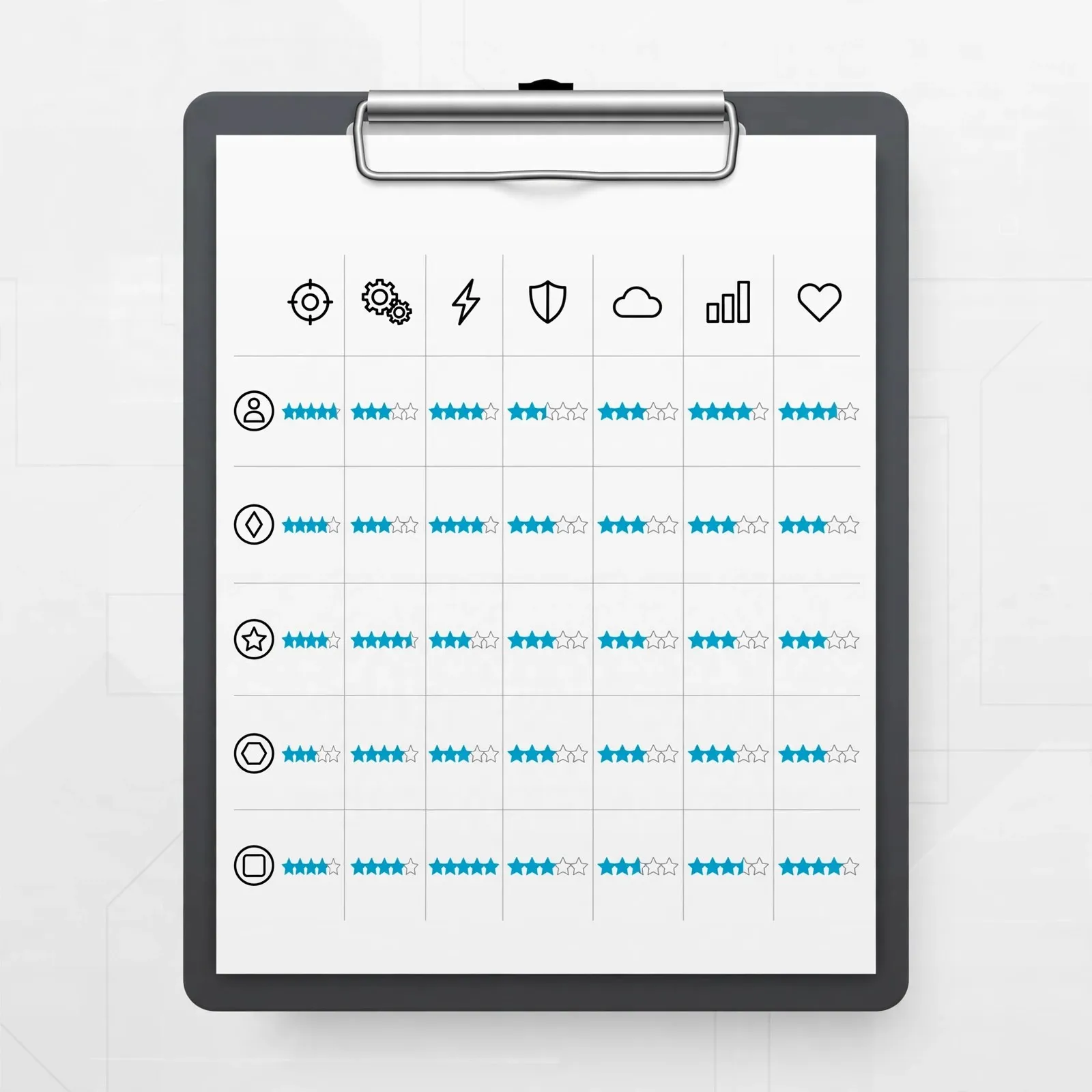


Follow this sequence before locking in a final name:
- Shortlist 8-10 candidate names based on tone, meaning, and industry fit.
- Run the read-aloud test with people unfamiliar with your industry.
- Check domain availability for the exact-match .com, prioritizing shorter lengths first.
- Search trademark databases for conflicts in your business category.
- Score each name against the 7-criteria table above, ranking every candidate from 1 to 5 per criterion.
- Eliminate any name scoring below 3 on pronounceability, legal clearance, or domain availability, since these three are effectively non-negotiable.
- Secure the domain immediately once a winner emerges, before announcing anything publicly or briefing a designer.
Frequently Asked Questions
What are the most important startup name criteria?
The most important startup name criteria are pronounceability, memorability, trademark clearance, and domain availability. Of these, domain availability and length often decide whether a name is realistically usable at all.
Why does domain length matter for a startup name?
Domain length matters because shorter domains are easier to type, easier to recall, and less likely to require awkward workarounds like hyphens or extra words when the exact-match .com is unavailable.
How many letters should a startup name have?
There’s no strict rule, but names between 4 and 7 letters tend to balance memorability with pronounceability most effectively, which is why 5-letter domains remain a popular sweet spot among founders.
Should I choose a name before or after checking domain availability?
Check domain availability early, ideally before finalizing a shortlist. Choosing a name first and discovering the domain is unavailable is one of the most common and costly startup naming mistakes.
Can a short domain really increase a startup’s brand value?
Yes. Short, clean domains are easier to remember and share, and they’ve historically held or appreciated in resale value compared to longer, less distinctive alternatives.
Conclusion


Startup name criteria aren’t abstract branding theory; they’re a practical filter that saves founders from expensive rebrands, legal disputes, and forgettable first impressions. Pronounceability, memorability, extensibility, legal clearance, emotional resonance, digital availability, and length all work together, and skipping any one of them tends to surface as a problem later, usually at the worst possible time. If your shortlist is already narrowed down, and secure a name that satisfies all seven criteria before someone else does.
Pingback: .com vs .io 5 Letter Domain: Which Builds Brand Equity?
Pingback: Domain Trademark Conflict: How to Check Before You Buy